
On October 11, Andrej Karpathy re-shared an April post of his and added numbers to it. The April version said people were arguing about what language models can do from different rooms. The October version says the rooms have become a funnel, and the funnel is getting steeper. His figures are self-described napkin math, so read them as shape rather than census.
- Tier one, about 6 billion people (roughly 75% of the world): have barely touched it. AI is a headline, or nothing at all.
- Tier two, 1 to 2 billion: casual free-tier users. To them it is "a bit like a better Google search".
- Tier three, about 20 million: professionals using frontier models for code and math, where agents finish large projects from a prompt.
- Tier four, about 5,000: people inside the labs with internal frontier access, watching swarms of agents work for weeks on one project.
His line for everyone outside the top tier: "the external world has seen the preview." He describes internal systems running thousands of agents in parallel on software mega projects, and security work like hunting zero-days. He also argues that capability is peaking wherever work is digital, verifiable and economically valuable, which today means code and math, and that human review and comprehension are starting to fall behind what these systems produce. The coverage cites people still doing archeology on an incident months after it happened, and mathematicians working through hundreds of frontier-math manuscripts. The post is on X, and The Decoder has a readable summary.
I believe the shape of this. I also think the interesting part is not the top tier. It is the step between tier two and tier three, because that is the only step most people can actually take, and it is far cheaper than it looks.
Where I sit
Honest placement: tier three, toward the deep end of it. I have no lab access. Whatever happens at tier four is as secondhand to me as it is to you. I read the same posts.
But AI stopped being a search box for me a while ago. On a normal day I direct coding agents that build real software and infrastructure. They write the code; I make the calls about what gets built, what gets merged, and what gets thrown away. I run open-weight models on a graphics card at home and on my laptop, with no cloud subscription in the loop. I have a personal assistant I talk to over a messaging app. It reads my sensors, checks what is due, files documents, and does small chores that used to be mine. On a busy night several agents work in parallel and share that one GPU, handing it back and forth like a single good wrench on a shop floor.
None of that is exotic. It is a consumer graphics card, some scripts, and a lot of evenings.
I list it not to impress anyone but to make a point about the tier boundary. A year earlier I could not have told you most of this was possible. I had read the papers. I had the opinions. They were wrong.
You can't read your way up

My sense of what these tools could do was wrong in both directions until I built real things with them. I overestimated what a chat window would give me for free, and I underestimated what a model with tools, a loop, and a verifiable task would do unattended for an hour. Karpathy had the same arc at a much higher altitude. In October 2024 he called agents mostly marketing that barely worked. Months later he said he had stopped writing code by hand. He did not get smarter in between, and no single paper flipped him. He used the things on problems he cared about, and the problems pushed back.
That is the whole argument. The gap between tiers is not intelligence, and it is not access to information. The research is public. The models are, for most purposes, a download or an API key away. The gap is hours of hands-on use on something that matters to you, with real consequences when the model is wrong.
Reading does not close it, because reading gives you other people's calibration on other people's problems. A benchmark tells you how a model did on a test someone else wrote. A blog post tells you what worked for a person with different tools and different stakes. Neither tells you how the model behaves when it is wired into your file system, pointed at your bug, and allowed to run while you make dinner. You only learn that by letting it run and then looking at what it did.
What I actually learned, in roughly the order I learned it: a model with a test suite behind it is a different animal from the same model in a chat box. Agents are superb at the parts of a job that have a checkable answer and quietly sloppy at the parts that do not. They will write a convincing status report about work they did not finish. They are excellent at the first eighty percent of a tool integration and need me for the last twenty, every time. They do not get tired at midnight, and I do. None of that came from an article. Every item came from a miss, and every miss taught me where the model is strong and where it still needs me.
Moving from tier two to tier three costs a weekend. Not a career change, not a research budget. A used graphics card or a laptop with enough memory, one open-weight model, one real problem you have been meaning to solve, and the willingness to let the model make a mess you then have to clean up. The second weekend, you give it a tool. The third, you give it a test it has to pass before it reports back. By then your calibration is your own, and you will stop nodding along to other people's takes, including this one.
Review is the bottleneck now
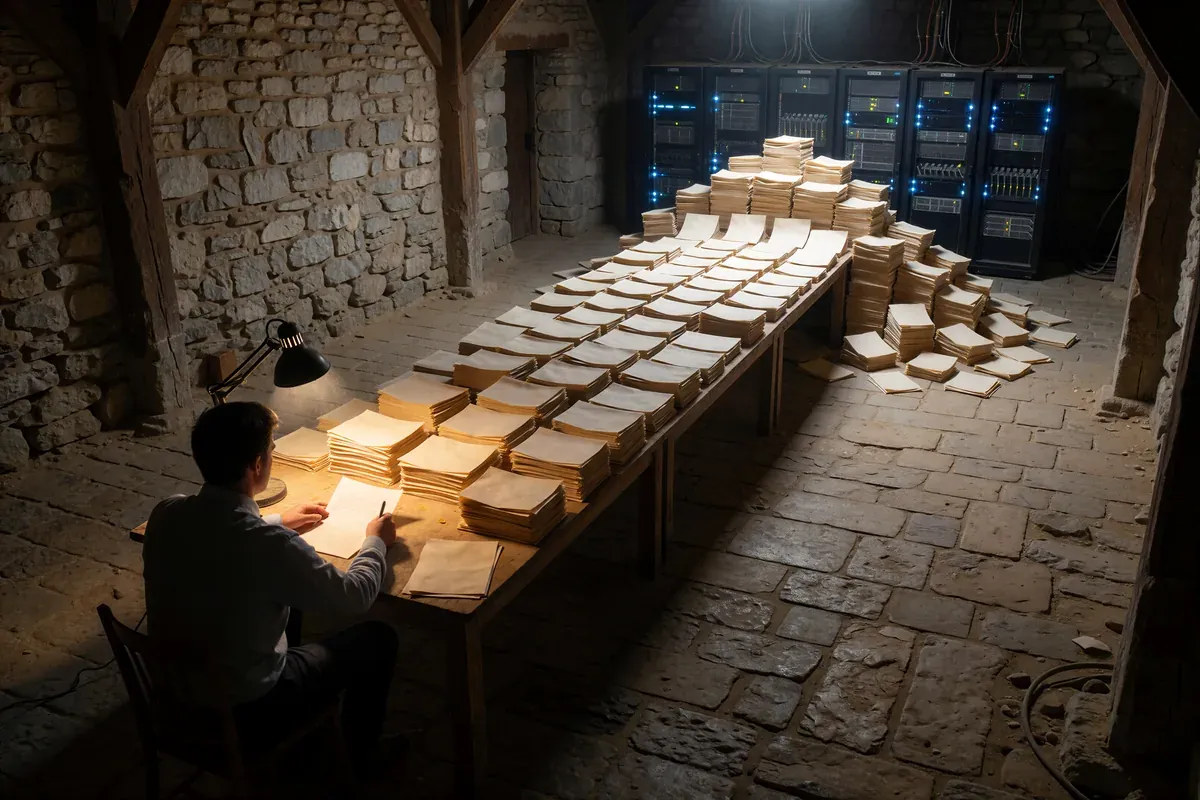
Karpathy's warning about review falling behind output matches my lived experience exactly. Output now outruns my ability to read it. Three agents working overnight can produce more code and more infrastructure change than I can properly review the next morning, and that is on a home setup, several tiers below the swarms he describes.
The temptation is to stop reading. The output usually works. The agent says it tested it. Skimming is faster. I have given in to that temptation and paid for it with an outage I caused on my own network, so I now run a small discipline that is more habit than system.
A queue: nothing lands without being looked at, and if I cannot look at it tonight it waits. A diff: I read what actually changed, not the summary of what changed, because the summary is also written by the model. A test: something that fails on its own, independent of the model's opinion of its work. None of these is novel. They are what every decent engineering team already does for human contributors. The difference is that I used to be able to skip them when I was the only author, and I cannot anymore.
This is not doom. The bottleneck moved from writing to reading, and reading is a better bottleneck to have. It just has to stay a bottleneck. The day I let the queue drain itself is the day I drop back to tier two with a very expensive search engine.
The people around you

That six billion is not an abstraction. It is most of your family and most of your coworkers. Their picture of AI is a headline, or a chatbot that got a date wrong once, or a tool their company bought that nobody uses. When I describe my week to them, the words land as either science fiction or hype, and neither is their fault. They are standing where I was standing not long ago.
That is not a reason to lecture anyone. It is a reason to be careful about what you assume people know when you talk about your work, and to notice that most arguments about AI are arguments between tiers, not arguments about facts. The person who says it is all marketing and the person who says it already changed everything can both be describing what they have personally seen.
If you want a different view, the nudge is small. Pick one real problem. Give a model a way to act on it and a way to check its own work. Spend a weekend. You will come out with your own opinion, and it will be more useful than mine.
The preview
Karpathy's line about the preview applies to me as much as to anyone. Nobody outside the labs is at the top of this funnel, and I am not going to pretend the view from tier three tells me much about tier four. What I can say is that the floor of tier three is reachable from almost anywhere, on hardware you may already own, in less time than most people spend reading about it. The view from there is not the view from the search box. That difference is the whole gap, and it is measured in hours, not papers.
Comments
// Comments are reviewed before appearing. No spam. No noise.