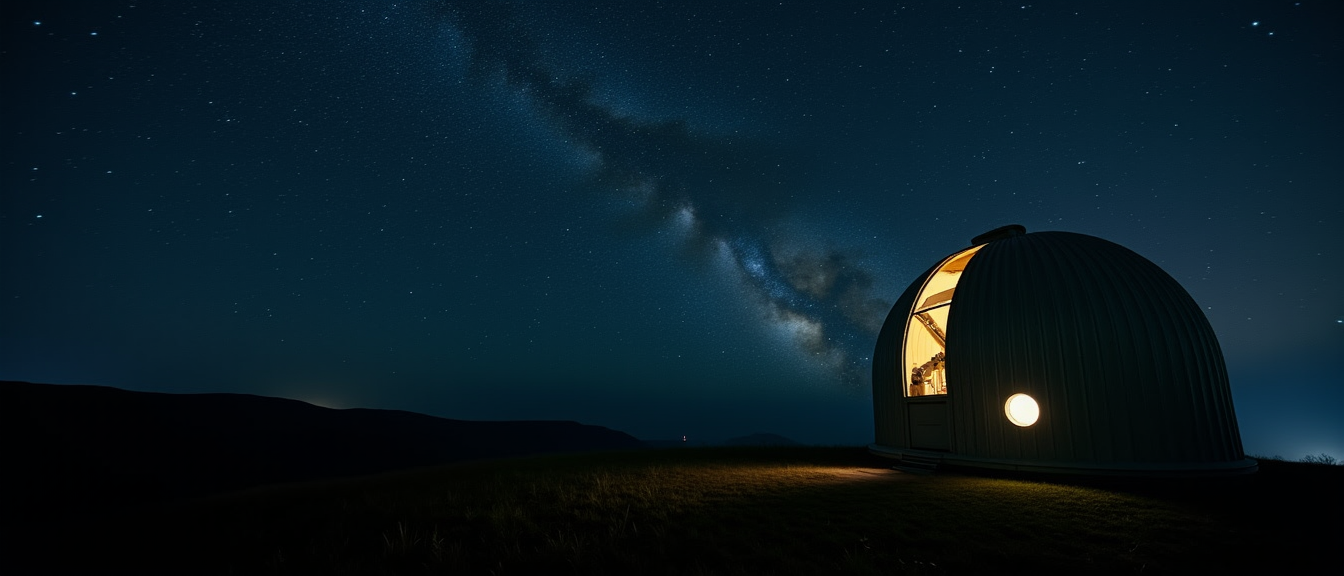
I would rather have questions that cannot be answered than answers that cannot be questioned. I mean that as a claim about mental health before it is a claim about method. An answer you cannot question has stopped doing the work of knowledge. It no longer tells you anything about the world, because nothing the world does is allowed to touch it. What it does instead is hold weight, and weight-bearing beliefs have to be defended, which is a very different job from being true.
The disposition behind the preference has a clean statement on record. "I can live with doubt and uncertainty and not knowing," Richard Feynman told the BBC in 1981. "I think it's much more interesting to live not knowing than to have answers which might be wrong." He is comparing open ignorance against false certainty, not knowledge against ignorance, and he ranks the open ignorance higher. That ranking is the whole subject of this piece.
I opened this series by defending the right to change your mind, and the pieces since have been about doing it well: updating on evidence without becoming a weathervane, trusting a trained gut without fooling yourself. This one sits underneath all of that, because every one of those skills presupposes a mind that can hold a question open without flinching, and that capacity has to be built. So let me state the thesis flat: preferring questions you cannot answer over answers you cannot question is load-bearing for a sound psyche.
What an unquestionable answer is for
The job of an unquestionable answer is anesthetic. It exists to make the pain of not knowing stop, and its truth is optional for that purpose. A false certainty numbs exactly as well as a true one.
The clinical literature on this is blunt. Researchers call the underlying trait intolerance of uncertainty, the degree to which not knowing is itself experienced as threat, and it is one of the most consequential risk factors in the anxiety field. It was first mapped in generalized anxiety disorder, where worry is a doomed attempt to convert open questions into settled ones, and it has since shown up under so many conditions (anxiety, obsessive-compulsive patterns, depression, eating disorders) that researchers treat it as transdiagnostic. R. Nicholas Carleton, who has pushed this line furthest, argues that "fear of the unknown may be a, or possibly the, fundamental fear."
Read that back against the principle. A mind that cannot tolerate open questions does not stop having them, because reality keeps supplying them. It goes shopping for closed answers and evaluates candidates on one criterion: how completely they end the questioning. Ideologies, conspiracies, fundamentalisms, and one-true-diet systems all compete on this feature, and the buyer's real requirement is that the question stop. Eric Hoffer mapped the supply side in The True Believer in 1951. "The effectiveness of a doctrine does not come from its meaning but from its certitude." And the design spec that follows: "If a doctrine is not unintelligible, it has to be vague; and if neither unintelligible nor vague, it has to be unverifiable." Read that as an engineering document. The doctrine is built so that no question can find a surface to grip, because totality is the product. The tell generalizes far beyond cults, and it is worth learning cold: any system in which doubt is treated as evidence against the doubter, as backsliding, ego, or disloyalty, is selling unquestionable answers, whatever else it claims to sell. A teacher whose answer survives questioning insists that you question it.

When the answer becomes the self
The anesthetic has a second stage, and it explains a behavior you have seen a hundred times: the disproportionate, personal, shaking anger of a true believer whose belief has been politely questioned.
Beliefs held as tools get evaluated. Beliefs held as identity get defended. When an answer stops being something you have and becomes something you are, the machinery that processes challenges to it changes. Jonas Kaplan and his team at USC put people in a scanner and challenged their strongly held political beliefs with counterevidence. The identity-level challenges recruited the amygdala and insula, regions central to threat and emotion, and the people showing the most activity there were the least likely to update. Their conclusion: the brain's emotional systems, built to protect the body, "appear also to be engaged when protecting the aspects of our mental lives with which we strongly identify." Nobody rages when you question their belief about the boiling point of water, because that belief is furniture, and this one is a limb. (Be careful with the pop version of this science: the famous "backfire effect," the claim that corrections systematically strengthen false beliefs, has mostly failed to replicate at scale. People update more than the meme says. The robust finding is narrower and worse: the more a belief is fused to identity, the more its correction is processed as an attack on the person.)
To make an answer unquestionable you have to weld it to the self, because nothing less will hold it still. And once it is welded, you have built a permanent attack surface. Every stranger with a counterargument, every stray dataset, every smart teenager at the dinner table is now a threat to your structural integrity. The anxious mind bought the answer to feel safe and ended up with more to defend than it started with.
The flash of heat
The welding is detectable from the inside, and you do not need a scanner. Wait for someone to poke a belief, and pay attention to the first half second. When the belief is a working answer, the sensation is mild interest: you reach for your evidence, and some part of you is genuinely curious whether you are about to lose, because losing would be cheap and informative. When the belief is welded, you get heat. It arrives before any counterargument does, the jaw sets, and the goal of the conversation silently switches from finding out to winning.
Read the heat correctly. It is a diagnostic of load, and it says almost nothing about evidence; some of the best-supported beliefs I hold generate no heat at all when attacked. The desk version of the same test: take a belief and finish the sentence "I might be wrong about this." If the sentence completes easily, the belief is an answer you hold. If something in you refuses it, you have found an answer that holds you. I keep a private list of what makes me flash, and it often contains things I did not expect.
Rigidity is brittleness
Rigid structures fail catastrophically and flexible ones shed load. A skyscraper survives an earthquake by swaying. Unreinforced masonry, the stiffest thing on the block, is the first thing down. Minds follow the same mechanics.
Milton Rokeach made the point in 1960 in The Open and Closed Mind, and his most useful finding is that closedness is a structure, independent of content. A rigidly closed mind on the left is architecturally identical to a rigidly closed mind on the right; what they share is how beliefs are held: walled off from disconfirmation, organized around authority, isolated from each other so that no fact in one compartment can disturb another. Fifty years later the clinical field converged on the mirror image. Todd Kashdan and Jonathan Rottenberg surveyed the evidence and titled the resulting paper "Psychological flexibility as a fundamental aspect of health." Flexibility predicts resilience across domains. Rigidity shows up, over and over, as the common texture of psychopathology.
A psyche built on unquestionable answers has exactly two ways to meet a world that keeps disagreeing with it, and both are failures. It can shatter. Everyone knows someone whose entire structure went down at once, the deconversion, the political apostasy, the collapse of the marriage or the company that was never allowed to be doubted, because when every joist is bolted to one load-bearing answer, the failure of the answer is the failure of the building. Hoffer watched what happens next: the shattered true believer rarely relaxes into an open mind, he converts, swapping one set of unquestionable answers for another, because the architecture never changed, only the tenant. Or the psyche can wall off. It survives by shrinking, pruning its information diet, its friendships, and eventually its curiosity down to the set of rooms where the answer is never challenged. The first failure is loud and the second is quiet, and the second costs more, because it compounds for decades. A mind organized around protecting an answer spends its best hours on garrison duty.
Building on open questions
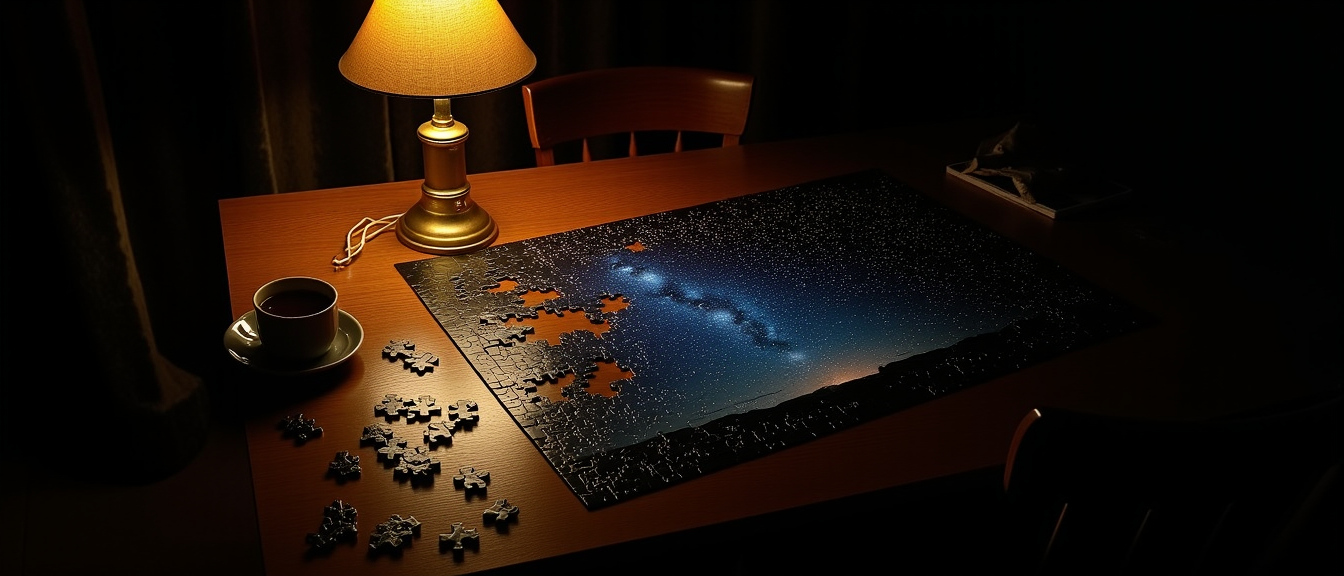
The alternative is a construction technique, and Feynman described it in his 1955 address "The Value of Science": "We have found it of paramount importance that in order to progress we must recognize the ignorance and leave room for doubt." He called scientific knowledge "a body of statements of varying degrees of certainty," some nearly sure, none absolutely certain, and he charged his audience "to teach how doubt is not to be feared but welcomed." Notice the engineering in that. A confidence level is a designed joint. A belief held at ninety percent has built-in travel; the disconfirming fact arrives and the structure flexes, updates, and stands. A belief held at one hundred percent has no travel at all, which is why the same fact that would merely adjust an open mind can crack a closed one. An open question, held deliberately, is where the building is meant to move.
The honest objection is that nobody can act on pure questions, and the objection is correct. You need answers to get out of bed, take a job, raise a child, hold a line. The distinction that matters is between a working answer and a welded one. A working answer is bolted in place: torqued down hard enough to bear real weight, inspected on a schedule, replaceable the day a better part exists. I hold plenty of beliefs firmly and act on them daily. What I refuse to hold is a belief that has been exempted from questioning, because the exemption contributes nothing to the belief's truth and everything to its danger. And the renovation goes one bolt at a time. A person who tries to unweld everything in a season ends up a demolition site, not an open mind; you rework one room while living in the rest of the house. Most beliefs survive the conversion, and I trust the survivors more afterward, because they have been given a real chance to fail.
This is the architecture underneath everything else in this series. Changing your mind without shame requires beliefs that were never welded to the self. Updating on evidence without becoming a weathervane requires confidence levels with travel in them. Even the trained gut only stays trustworthy in a mind still willing to score it and find it wrong. All three are behaviors of a structure with joints. None of them can be performed by masonry.
The rule I actually live by
The practice is maintenance, not philosophy, and it is unglamorous. When I catch the flash of heat, that belief goes to the top of the inspection list, not because it is likely to be wrong but because it is the one I have stopped inspecting. The beliefs that never protest an audit are carrying only their evidence. The ones that protest are carrying something else, usually a piece of me, and those are the bolts I check first. Most pass. The point of the inspection is not to lose beliefs, it is to know which ones are still attached to the world.
I also keep a standing list of questions I cannot answer, some of them decades old, about consciousness, about the universe, about what I owe the people I disagree with. I used to treat them as unfinished work, evidence the structure was incomplete. I now treat them as the joints, the places my mind is built to move, and the years I handled them worst were the years I tried to pour concrete into them. Doubt is the engineering that lets the building take a hit, not a crack in the structure. I would rather have questions that cannot be answered than answers that cannot be questioned, and that preference is how I intend to stay standing.
Comments
// Comments are reviewed before appearing. No spam. No noise.