
The word is older than the image
Before there was a goat-headed figure, there was a word, and the word came from confusion.
The earliest recorded use of "Baphomet" is from Crusader poets in the 12th century. Anselm of Ribemont wrote of Bafometz in 1098. The word was a Latin corruption of "Mahomet," itself a European corruption of Muhammad. Crusader writers, encountering Islam through hostile rumor rather than direct study, treated the prophet as an idol the Saracens supposedly worshipped. The word travelled through troubadour verse for two centuries as a generic stand-in for foreign religion.
Then came the Templars.
In 1307, Philip IV of France arrested the Knights Templar on charges that included worshipping an idol they allegedly called Baphomet. The descriptions vary wildly across the trial transcripts: a head with three faces, a black cat, a bearded skull, a hermaphrodite. No two confessions agree, which is what happens when confessions are obtained under torture from people who do not know what they are supposed to confess to.
What Philip wanted was the Templars' wealth. What he got was a heresy charge specific enough to convict and vague enough to never be proven.
The historical Baphomet is what happens when a king needs a reason and the truth is inconvenient.
The image is younger than your great-grandmother
The figure most people picture, the goat-headed androgyne with a torch between its horns, did not exist until 1856.
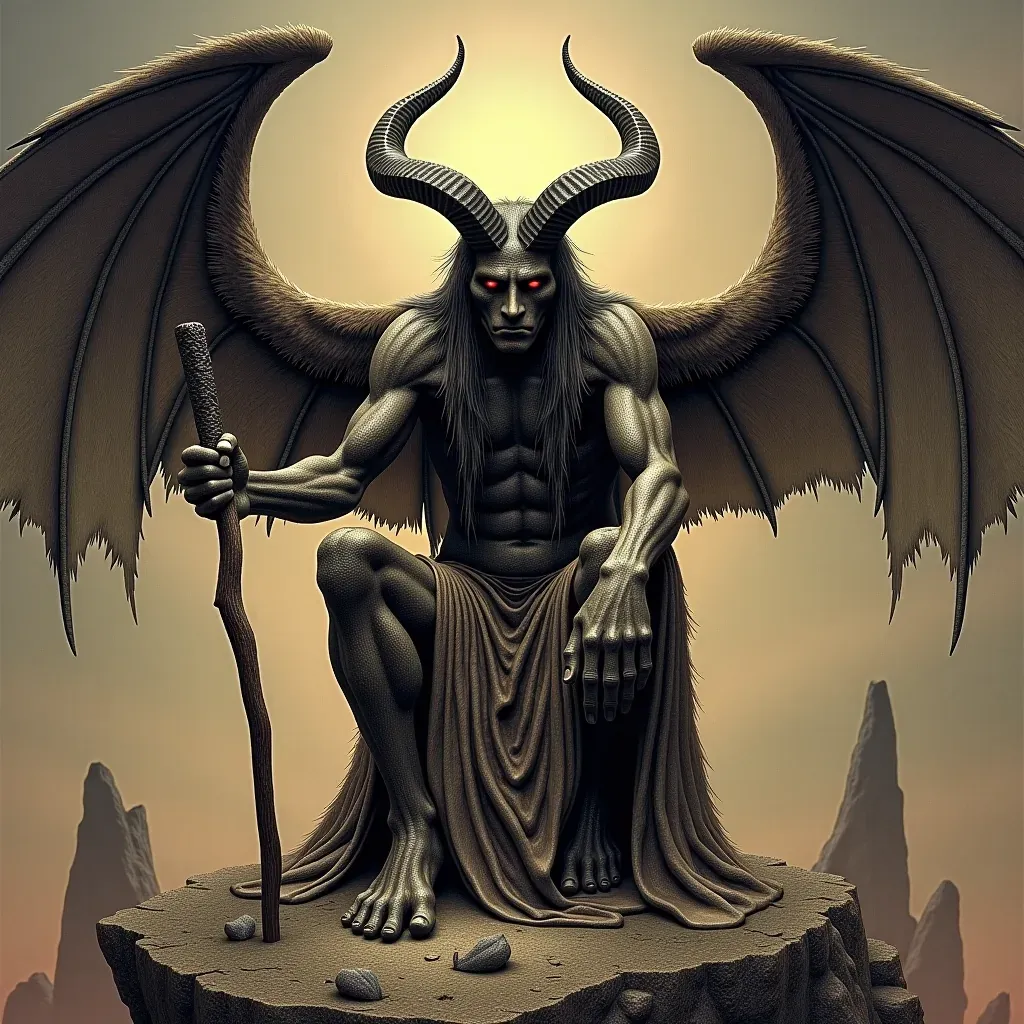
It was drawn by Éliphas Lévi, born Alphonse Louis Constant, a defrocked French Catholic deacon turned occultist, for his book Dogme et Rituel de la Haute Magie. Lévi called it the Sabbatic Goat. He intended it as a deliberate synthesis: male and female, animal and human, light and dark, vice and virtue. The arms bore the words solve (dissolve) and coagula (bind), an alchemical formula for the unity of opposites.
Lévi was not drawing a devil. He was drawing a thesis: that the divine and the material are not separate, that wisdom requires holding contradictions together. The goat was chosen for its medieval Sabbatic associations, but the meaning Lévi attached to it was philosophical, not infernal.
The figure was almost forgotten until Aleister Crowley picked it up in the early twentieth century and rebranded it inside his own system. From there it travelled to Anton LaVey, who put it on the cover of The Satanic Bible in 1969 and stamped the association in the popular mind: Baphomet equals Satan.
That association is sixty years old. The image is one hundred sixty. The word is a thousand. None of them mean the same thing.
What it means now is whatever sells
The Satanic Temple commissioned an eight-foot bronze Baphomet statue in 2014, originally proposed for the Oklahoma State Capitol grounds as a counter to a Ten Commandments monument. The point was not religion. The point was a legal argument about the Establishment Clause, dressed in iconography that would force the issue.
It worked. The Ten Commandments came down. The Baphomet statue is now a touring exhibit and a fundraising icon.
From there the figure became scenery. Sabrina Spellman's school had one. Lil Nas X gave one a lap dance in the "Montero" video. Fashion brands print it on hoodies. The image is now a generic shorthand for edgy, an aesthetic detached from any particular argument about wisdom or rights or anything else.
This is the normal life cycle of a symbol. A specific idea gets compressed into a picture. The picture circulates. The compression decays. Eventually you have an image with strong vibes and no content, which is exactly the form a symbol needs to take in order to be sold.
The interesting question
The question is not whether Baphomet is good or evil. Both readings require taking the symbol more seriously than any of the people using it now actually do.
The interesting question is why the figure keeps mutating. Crusaders needed an enemy to project onto. A king needed a heresy to seize a fortune. An occultist needed an icon for the unity of opposites. A satanist needed a brand. A legal organization needed a wedge. A pop star needed a viral image.
Each generation gets the Baphomet it needs. The figure does not have a meaning. It is a mirror, which is why the things people see in it are the things they brought with them.
Comments
// Comments are reviewed before appearing. No spam. No noise.