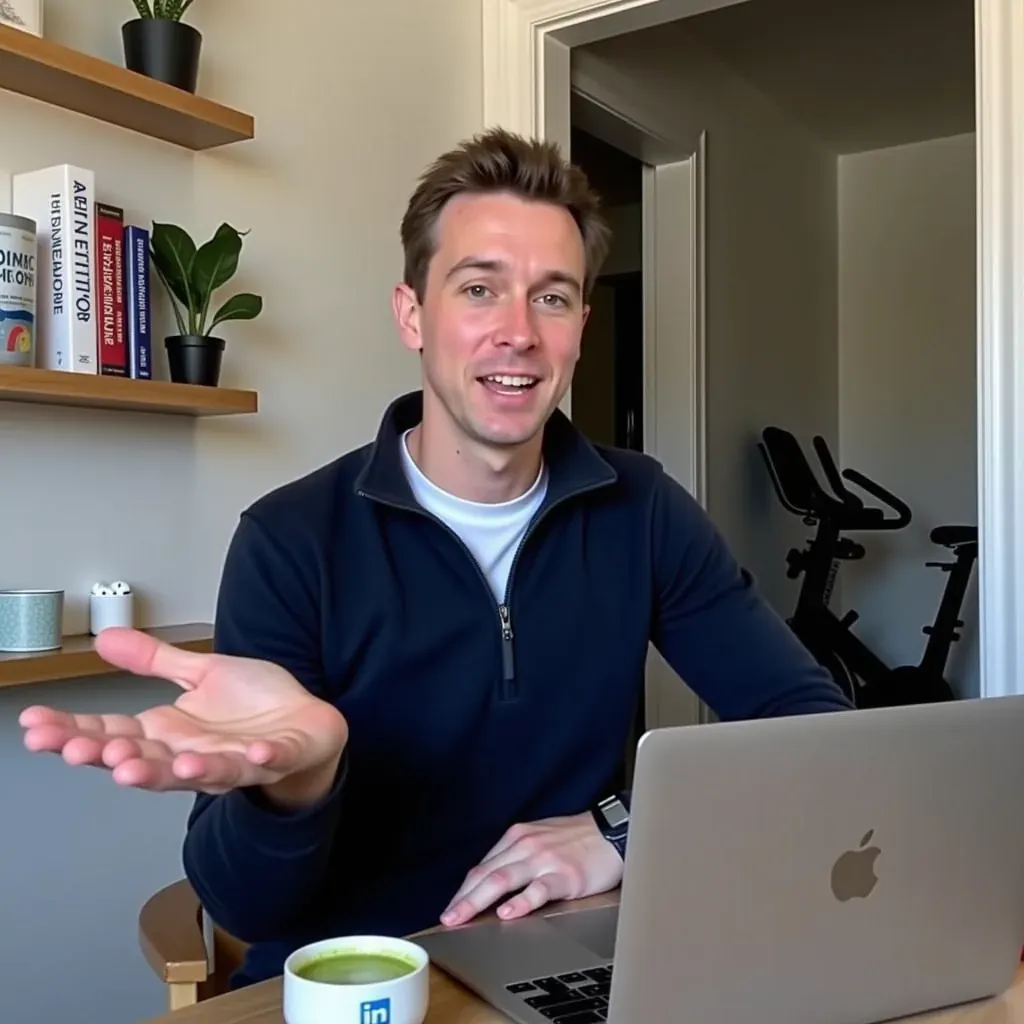
A field guide to the LinkedIn AI prophet
"Been thinking about this a lot lately. Last night, at 2am, ChatGPT and I had a conversation that changed everything. What it told me about the future of work will keep you up at night. Here are 7 things every product manager needs to know before Monday."
That paragraph is not a real post. It is every post. It is the platonic form of a genre that now occupies roughly forty percent of the LinkedIn feed and one hundred percent of the engagement budget of a certain kind of professional.
The formula, deconstructed
The opening is always a small confession of insomnia, parenthood, or career anxiety. The author was up late. The author was on a walk. The author was watching their child do something charmingly human when the thought struck them, like prophecy, that everything is about to change.
Then comes the prompt. The prompt is always pedestrian. "Write me a marketing plan for a coffee shop." "Summarize this PDF." "Make a packing list." The output is described as mind-blowing, chilling, better than 90% of analysts. No screenshot is ever provided, because the output, if reproduced, would resemble the back of a cereal box.
Then the listicle. Always odd-numbered, because odd numbers feel less corporate. Always between five and nine items, because that is the upper bound of what can be skimmed on a phone in an elevator. The items are interchangeable:
1. The job is not going away. The job is evolving. 2. The winners will be those who learn to collaborate with AI. 3. Curiosity is the new currency. 4. Soft skills matter more than ever. 5. The future belongs to the adaptable.
Each of these sentences is true in the way that "water is wet" is true, which is to say true in a manner that conveys no information.
The closer is a question. What do YOU think? The capitalization of YOU is mandatory. The question mark is mandatory. The intent is mandatory: to convert a monologue into the appearance of a conversation, because the algorithm rewards comments and the author needs comments.
Why this genre exists
It exists because the incentive structure on LinkedIn rewards exactly this shape. The platform's feed favors posts that generate replies. Replies are easiest to extract from content that pretends to ask a question while actually delivering a sermon. A confident assertion gets a like. A vulnerable assertion gets a comment. A vulnerable assertion that ends in a question gets a comment plus a share plus a follow.
It exists because expertise theater is cheaper than expertise. Telling people what ChatGPT did this morning takes four minutes. Knowing something about a domain takes ten years. The market has not yet figured out how to tell the difference, and there is a window, possibly closing, in which one can be substituted for the other.
It exists because anxiety sells. Nobody reposts a calm take. The genre has discovered that the optimal emotional register is controlled panic, performed by someone who has clearly already adapted. The reader is invited to feel afraid, then immediately reassured that the author has the framework. The framework is always in the next post.
And it exists because most of the people writing it are not, in any meaningful sense, AI experts. They are professionals in unrelated fields who noticed that posting about AI gets ten times the impressions of posting about their actual work. The content is not insight. It is the same person reposting their own anxiety as insight, wearing the costume of authority, hoping the algorithm mistakes confidence for credentials. Often it does.
What LinkedIn would look like otherwise
Strip the genre out and imagine what remains. People describing real problems they solved, with the numbers. People admitting that a project failed and explaining why. People recommending books they actually finished. People asking questions because they do not know the answer, not because they want comments.
It would be quieter. It would be less viral. It would be considerably more useful.
The genre is not going away, because the incentives that produced it are still pointed at it. But the next time a post opens with "I've been thinking about this a lot lately", it is worth asking what the author has actually been thinking, and whether they have, in fact, been thinking it lately, or for the past twelve seconds, in the prompt box.
The mind that gets blown so reliably, every Tuesday morning at 8:47am Pacific Time, may not have been all that fortified to begin with.
Comments
// Comments are reviewed before appearing. No spam. No noise.