A category that has been quietly retreating
There is a small class of objects that get better with use. Cast iron. Raw denim. A wooden cutting board. Leather boots the wearer has resoled twice rather than retiring. The category is defined by one property: wear is not damage. The marks become the object.
Vegetable-tanned leather is the cleanest current example. Unlike the chrome-tanned hide in most luggage, veg-tan starts pale and darkens under sun, oil, and friction. The patina is not a coating. It is the leather reorganizing in response to the environment. Two identical pieces, carried by two people for a year, will not look alike at the end.
Apple's MacBook chassis is the precise opposite. The aluminum is finished to a tolerance that makes the first scratch feel like vandalism. Every mark is a subtraction. The object peaks the moment it leaves the box. The category that improves under use has been retreating from consumer life for fifty years, replaced almost entirely by the category that arrives perfect and declines.
The sleeve in question
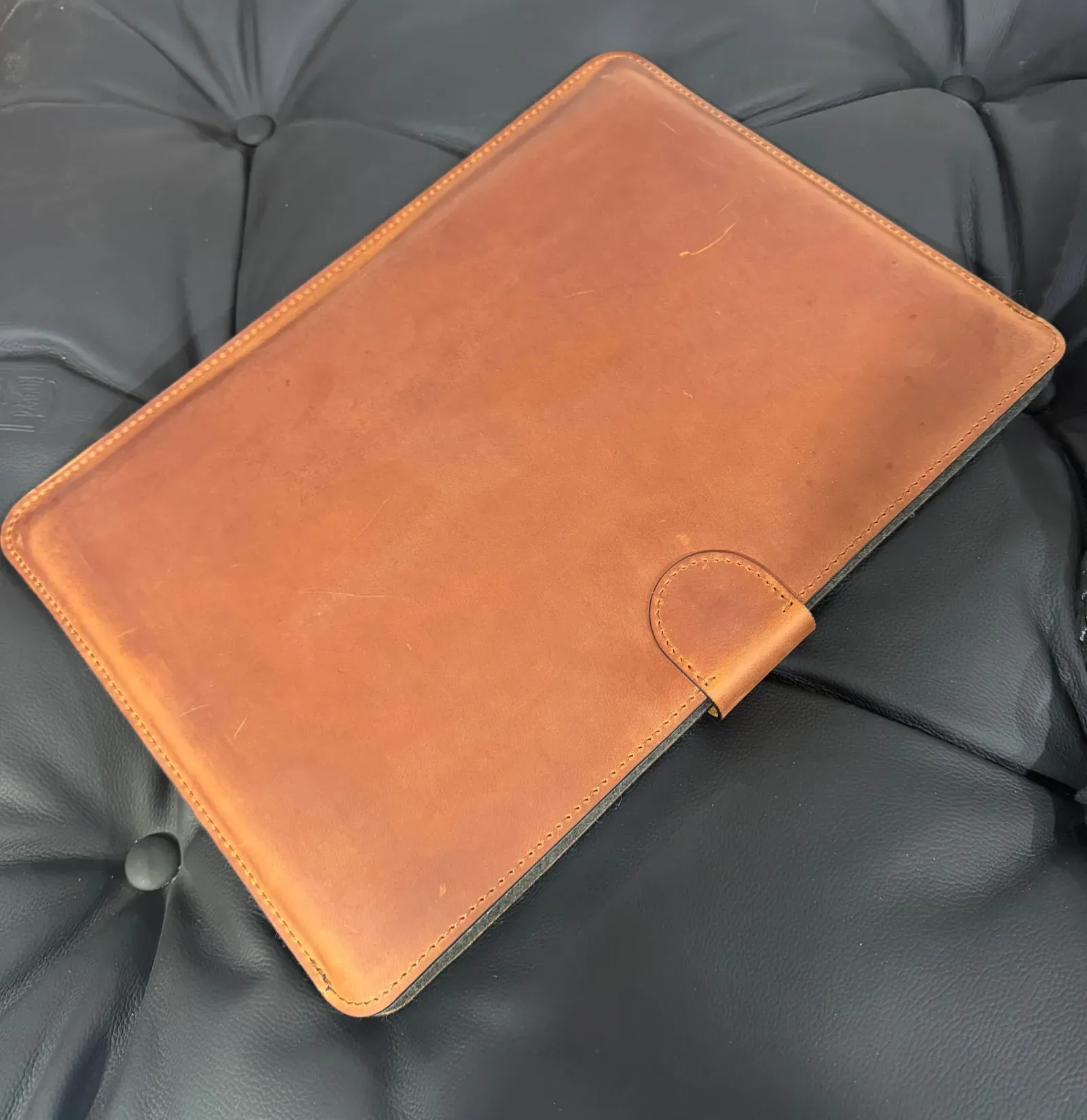
The object on the desk is a veg-tanned leather MacBook sleeve from Crazy Horse Craft, with an interior pocket for an AirTag. It is a good piece of work. Protective in the way thick leather is protective: by absorbing impact rather than transmitting it. Visible stitching, natural fiber thread, edges burnished rather than painted. It looks, in the hand, like something that was made instead of assembled.
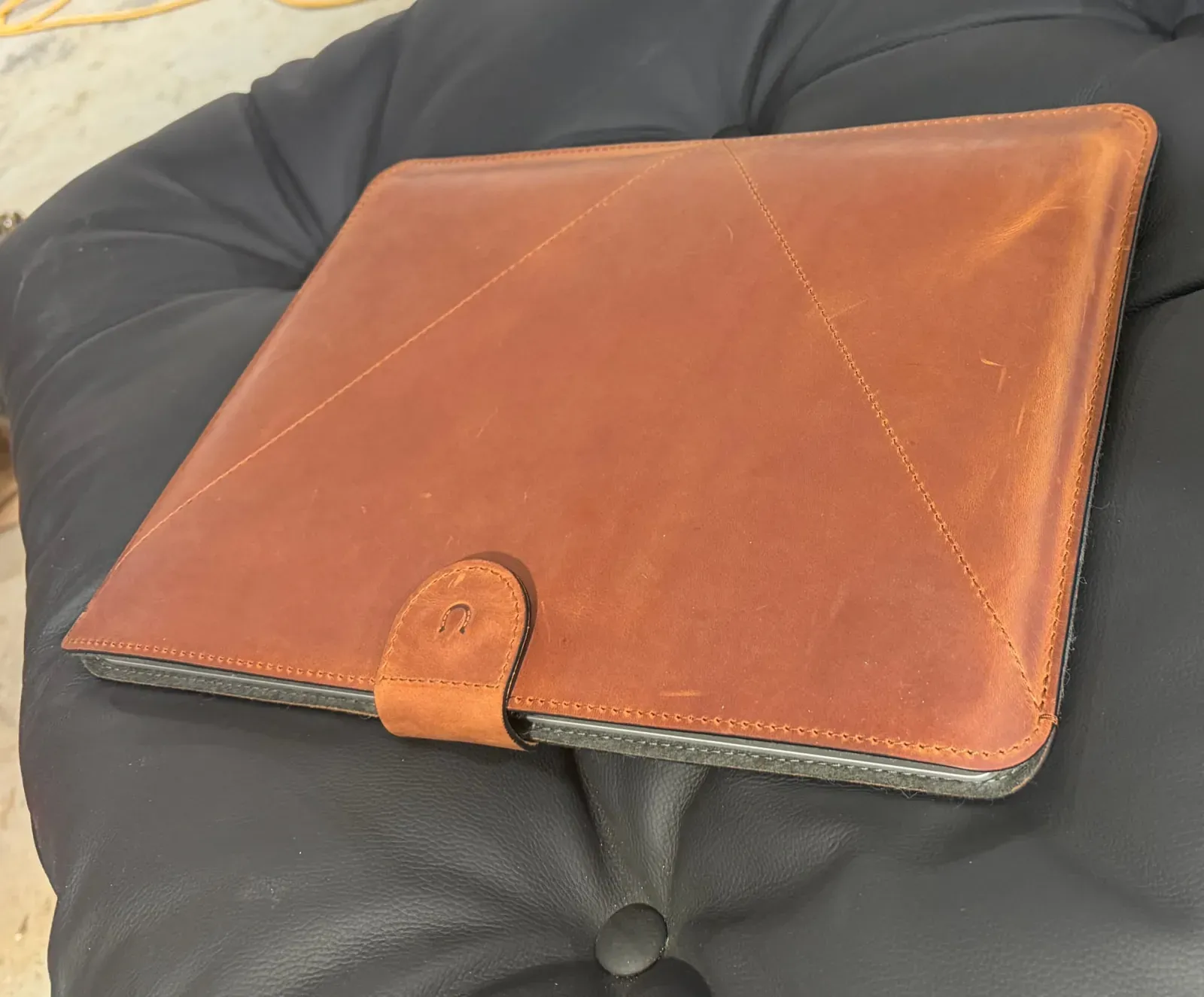
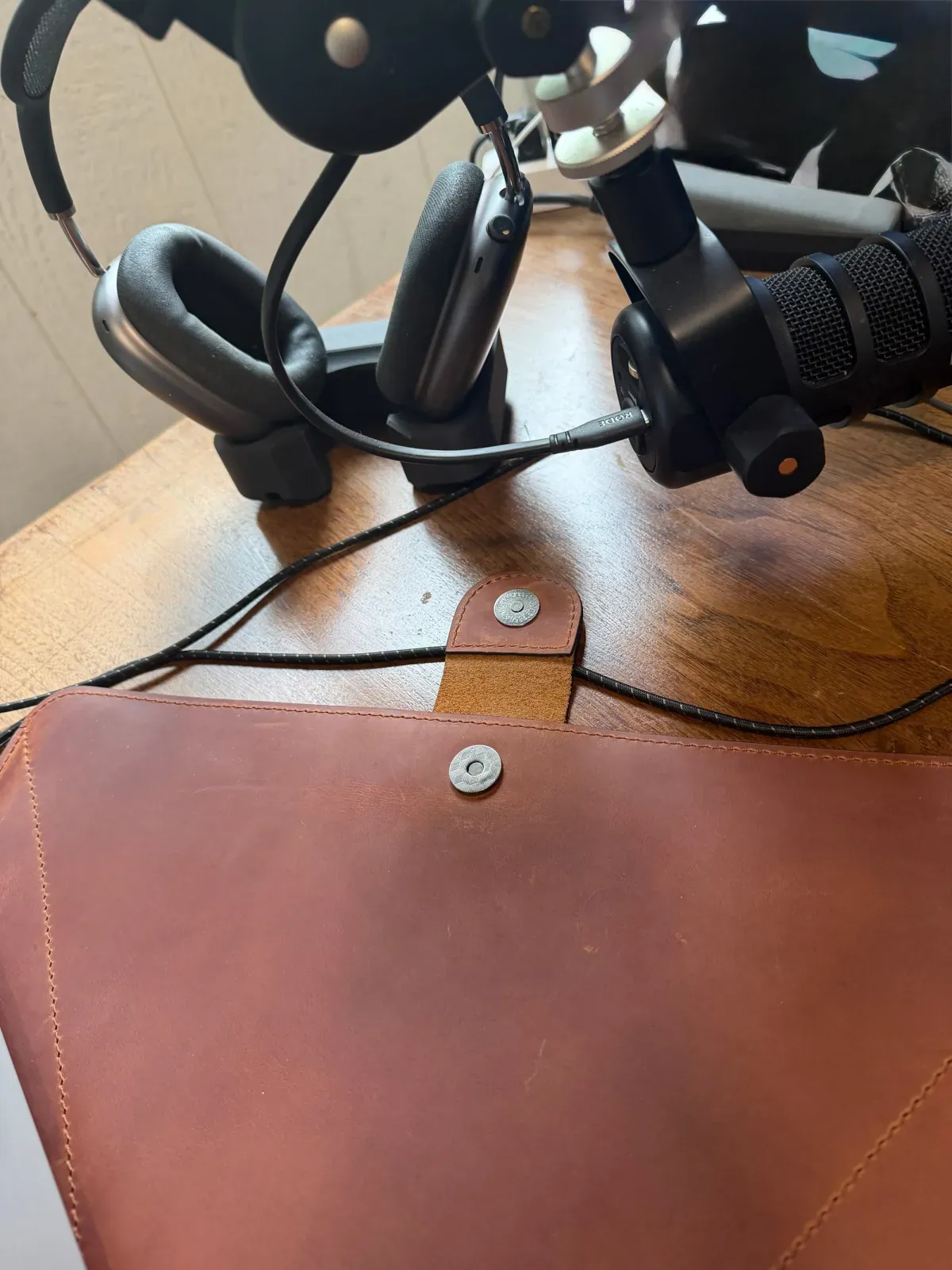
Two small notes, more for the maker than for anyone deciding whether to buy. The leather is a touch thinner than expected, closer to mid-thickness than the dense full-grain that lets the best veg-tan pieces stand on their own. The interior wool padding is the giveaway: a slightly thicker hide would do the protective work without needing a liner, and the sleeve would carry more standalone presence on the desk for it. The clasp is functional but fiddly, and once fastened it does not inspire enough confidence to trust the full weight of the laptop in it. The hardware also raises the sleeve's profile just enough to catch on a desk pad when sliding the laptop out. A full-length magnetic flap, or no flap at all, would close all three gaps at once.
Why the category matters
Most of what gets sold as premium today is fragile, not durable. The vocabulary has been quietly inverted. Premium now means soft-touch finish, OLED screen, ceramic shielding, all surfaces that will be visibly worse in two years. The objects that will be visibly better in two years tend not to be marketed as premium at all. They get marketed as craft, or heritage, or with no vocabulary at all, just photographs of a thing on a workbench.
The category that gets better with use is small, and getting smaller. Most of daily life is now spent with objects engineered to look new for as long as possible, then quietly disappear when they cannot. That is not a moral failing of those objects. A laptop is supposed to be a precision instrument, and a precision instrument does not benefit from a patina. But the inventory of things that do benefit, the ones built so that years of use make them more themselves, is worth tending. Owning one or two of them, even an imperfect one, keeps the category alive on the desk.
Buy things that get better. The category is the point, and the category needs members.
Comments
// Comments are reviewed before appearing. No spam. No noise.